Reading Basin Faucet Certificates: SGS ISO 9001 vs TUV Austria EN 813
A certificate pack attached to a basin faucet order is not proof that the faucet is certified. The two documents most often attached to an Ehoo Plumbing Co., Ltd. export file answer completely different questions. The SGS ISO 9001:2015 certificate, number CN21/31351 and valid from 2024-08-03 to 2027-08-03, describes the quality management system that runs the factory. The TUV Austria approval, number TA 385213725 against EN 813:2008 and valid from 2021-06-15 to 2026-06-15, is a product-standard reference aimed at the EU market. Filed side by side without being read, neither document tells a buyer whether the brass basin faucet inside the carton is actually covered.
Answer first: read every document on five fields — issuer, scope, standard, destination market and validity dates — before accepting it. ISO 9001 answers “how is this plant managed”. TUV Austria to EN 813 answers “which product standard was assessed, in which market, and until when”. Coating figures such as chrome and nickel thickness belong to a third category and must come from a plating or salt-spray report, not from either certificate.
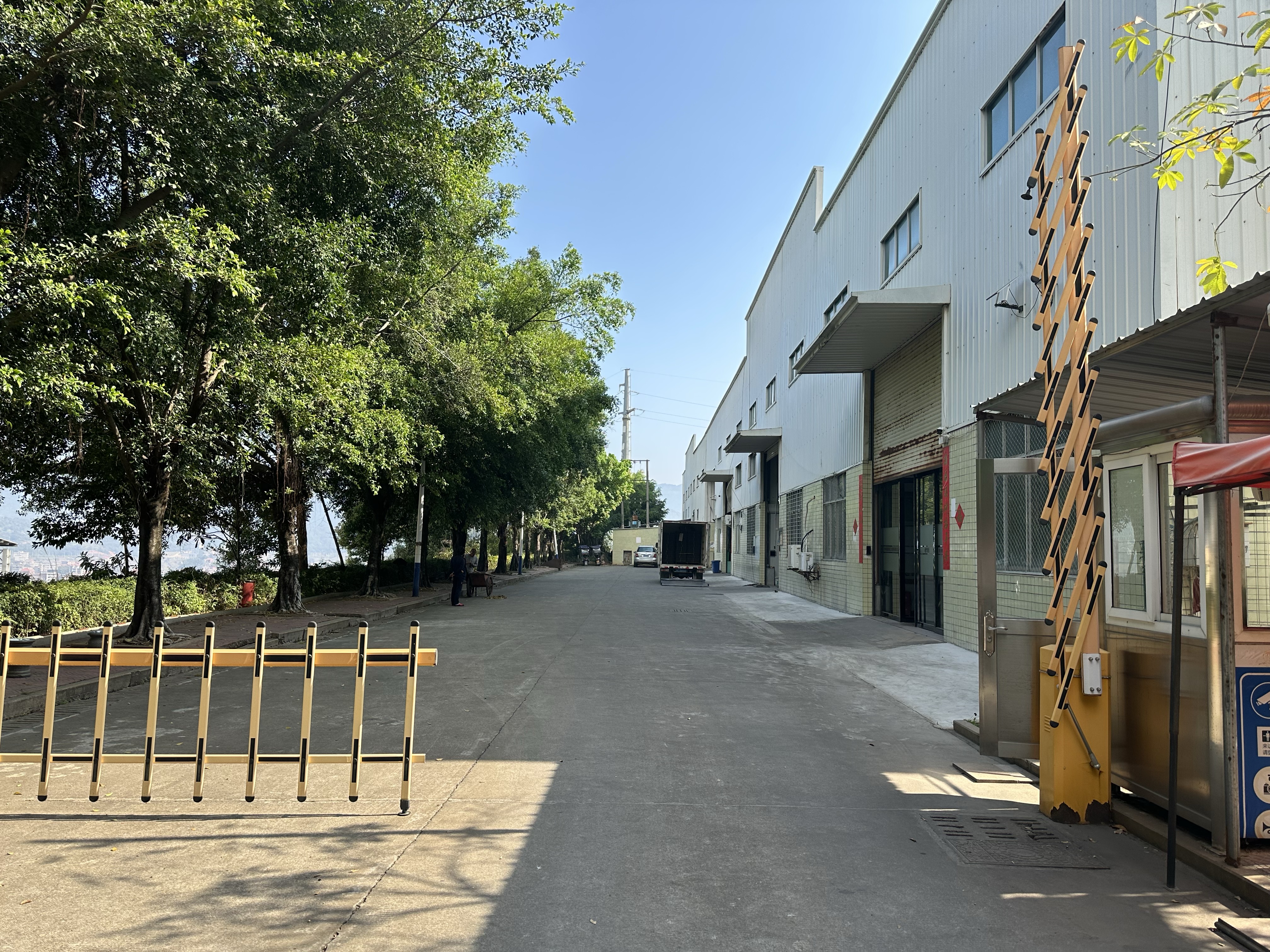
Documentation starts on the floor: the Quanzhou site where brass basin faucet batches are machined, assembled and tested before any certificate pack is assembled for a buyer.
Why Basin Faucet Certificate Packs Fail Buyers
An RFQ response from a brass basin faucet factory typically contains six to ten PDFs. Procurement teams working against a deadline check that the file opens, check that a logo appears, and approve. Four specific failures follow from that habit, and each one is avoidable in under ten minutes.
1. A management-system certificate read as a product approval
ISO 9001:2015 certifies a quality management system. It says that processes for design, production, inspection and corrective action are defined and auditable. It does not state that a specific deck mounted basin faucet meets a European tapware standard, delivers a stated flow rate, stays inside a lead limit, or carries a defined plating thickness. Buyers who present ISO 9001 as evidence of product conformity are asking the document to prove something it was never issued to prove.
2. A product approval read outside its market
The TUV Austria approval in this file was issued against EN 813:2008 for the EU market. That makes it useful evidence for an Italian or UK buyer building an EU-facing product file. It is not a South American customs document, it is not a Southeast Asian retailer listing requirement, and it does not answer a North American plumbing-code question. A product approval travels only as far as the market it was written for.
3. A validity window nobody checked
Dates decide more than logos. As of November 2026, the TUV Austria certificate in this file states validity from 2021-06-15 to 2026-06-15 — the window has closed. A buyer reviewing that document now should request the renewal certificate before treating the approval as current, and should ask what the renewal covers if the model list changed. The SGS ISO 9001:2015 certificate, running to 2027-08-03, remains inside its stated period. A supplier that forwards a lapsed document without a renewal note is revealing something about document control; a buyer who files it without checking is creating audit exposure for themselves.
4. A scope that never named your model
Every certificate is issued against a defined scope. That scope may cover a factory, a product family, or a single model. For a basin faucet program the questions are concrete: which models of brass basin faucet does the scope name, are single handle, double handle and concealed basin faucet configurations inside it, and are customized basin faucet variants built to a buyer's drawing covered or excluded? A scope that lists two SKUs does not protect an order of nine.
Industry Background: Documentation Volume Is Rising With Volume
The global faucet market was projected to grow from USD 26.8 billion in 2026 to USD 45.5 billion by 2033, according to Grand View Research. The same source reports that bathroom faucets accounted for 59.1% of revenue share in 2025, and that brass and stainless steel together represented 78% of material usage in 2023. More volume means more SKUs, more private label ranges, and more documents moving between factories and buyers — which is precisely why document literacy has become a purchasing skill rather than a legal afterthought.
Ehoo Plumbing Co., Ltd. is a faucet manufacturer established in 2002 in the plumbing industry park in Quanzhou, Fujian, China, producing basin faucet, kitchen faucet, shower faucet, concealed faucet and sensor faucet ranges across brass, DZR brass, 59-1 national standard brass and lead-free brass. Export accounts for 100% of sales, with major markets in the EU, South America and Southeast Asia, and products sold in Singapore, Malaysia, the UK and Italy. The company operates a 6,000 m² factory with monthly manufacture value exceeding 150,000 sets, and holds SGS ISO 9001:2015, ISO 45001:2018, ISO 14001:2015 and ISO 14067:2018 system certifications alongside TUV certification, EN 817:2008 and EN 200. That combination is exactly the kind of file that gets misread: system certificates, product approvals and standards references arriving in the same email.
How to Read Each Certificate Correctly
The five fields that decide whether a document matters
- Issuer — who signed it, and can the certificate number be looked up in that issuer's own register?
- Scope — which legal entity, which site, which product families, which models.
- Standard — the exact standard and year, not the marketing name around it.
- Market — the jurisdiction or regulatory regime the document was written to support.
- Validity — issue date, expiry date, and the surveillance cycle in between.
If any of the five is missing or unreadable, the document is not yet usable. Request the readable version before the quotation moves forward.
Certificate A — SGS ISO 9001:2015, certificate CN21/31351
The issuer is SGS, a third-party certification body, and the standard is ISO 9001:2015 for a quality management system. The certificate number CN21/31351 and the validity period 2024-08-03 to 2027-08-03 are the two identifiers a buyer should verify directly against the issuer's register rather than against a scanned copy.
What to check before accepting it: the certified legal entity reads Ehoo Plumbing Co., Ltd., the certified site address matches the factory you intend to audit, and the certificate is inside its validity period at the time of your shipment — not merely at the time of quotation. What it does not prove: that a chrome finished basin faucet from that plant conforms to EN 817:2008 or EN 200, that the plating measures a particular thickness, or that any single order will be produced to your drawing. ISO 9001 is a system statement; the product evidence sits elsewhere in the pack.
Certificate B — TUV Austria, certificate TA 385213725, EN 813:2008
This is a product-standard approval issued by TUV Austria for the EU market, and the standard named on it is EN 813:2008. The certificate number is TA 385213725 and the stated validity runs from 2021-06-15 to 2026-06-15.
What to check: the annex or model list inside the certificate, and whether the SKUs you actually purchase appear on it. Confirm with the issuer which tapware configuration the approval covers, because European tapware standards are configuration-specific — EN 817 is normally applied to mixer-type products such as a hot and cold basin faucet, EN 200 to single taps and combination taps, and EN 813 is the standard named on this certificate. A certificate issued to one configuration does not automatically extend to a concealed basin faucet or a sensor model. What it does not prove: how the factory is managed, how thick the plating is, or whether models outside the listed scope conform.
Supporting evidence that is not a certificate
EN 817:2008 and EN 200 appear in Ehoo's certification list as European tapware standards the company works to, and they are the correct reference points when a European buyer specifies mixer or single-tap performance. They are standards, not certificates: they mean nothing on their own and everything when paired with the test report that shows which model was assessed, by whom, and against which clauses.
Plating thickness is a test datum, not a certificate. A specification requiring chrome above 0.3 µm and nickel above 10 µm is describing a coating requirement that must be demonstrated by a plating thickness measurement and supported by a salt-spray result — the ISO 9001 certificate says nothing about either value, and a TUV Austria approval to EN 813 does not substitute for a model-specific coating report. Where a program states a different finish parameter, the approved drawing, the quotation and the plating report must be reconciled before approval rather than averaged. Ehoo's laboratory list — metal spectrometer, valve life testing machine, water flow testing machine, salt spray testing machine and product sealing testing machine — matters here because those are the instruments that generate the reports a coating claim depends on.
Seven Steps to a Clean Certificate File
- Split the pack into three piles. System certificates (ISO 9001, ISO 14001, ISO 45001, ISO 14067), product approvals (TUV Austria, and any national approval), and test reports (plating thickness, salt spray, valve life, flow, sealing). Never discuss them as one bundle.
- Verify the issuer and the number. Look up SGS certificate CN21/31351 and TUV Austria certificate TA 385213725 in the issuers' own registers, and compare the entity name printed there with the entity on your purchase order.
- Read the scope sentence before the cover page. Highlight the models, the site and any exclusions. If your deck mounted basin faucet or your customized basin faucet variant is not named or not covered by the family description, ask for written confirmation of inclusion.
- Match the standard to the configuration. A hot and cold basin faucet is a mixer; a cold-only pillar tap is a single tap; a low-pressure fitting is a different category again. Ask which standard applies to your SKU before accepting any certificate as the answer.
- Compare dates to your schedule, not to today. Add at least twelve months of margin between the certificate expiry date and your latest shipment or tender submission. On that basis the TUV Austria approval, with validity ending 2026-06-15, must be re-issued or renewed before it can support a 2027 program.
- Map each document to the destination market using the table below, and drop any document that answers a market you do not sell into.
- Tie the document to a batch. Ask that each shipment file carry the model number, the batch or date code, the relevant test report reference and a current copy of the certificates that apply. That single habit converts a static PDF into traceable evidence.
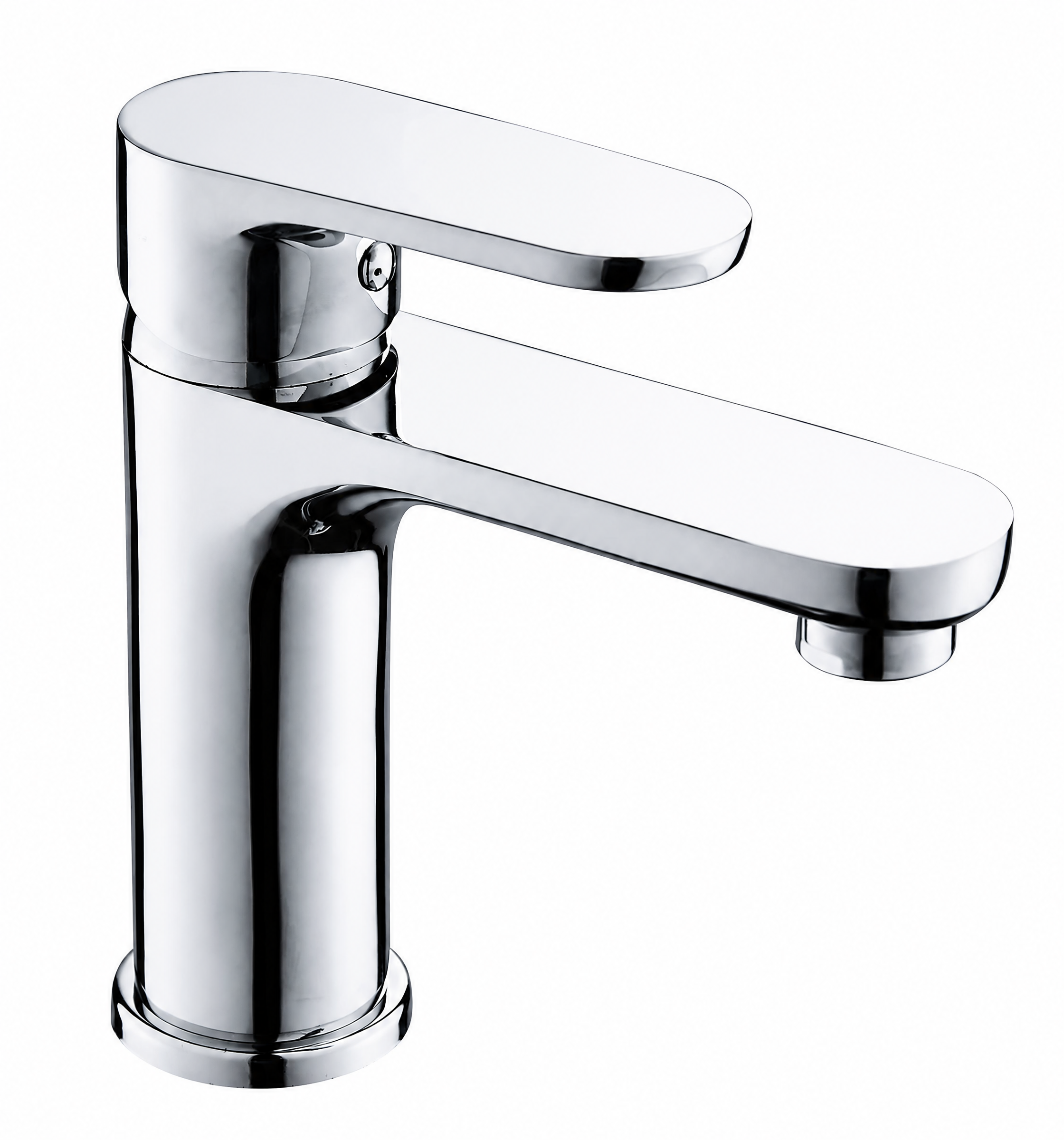
Ehoo brass basin faucet model 35801-515: minimum order quantity 400 pcs, OEM and ODM accepted, 5-year warranty.
Use Cases: One File, Three Destination Markets
European Union
An EU buyer needs three things from the pack: a current system certificate, a product approval or test evidence against the relevant EN standard, and a separate answer on CE marking. A TUV Austria certificate is not a CE Declaration of Conformity — ask for the declaration separately and ask which directive or regulation it cites. For an Italian or UK distributor running a chrome finished basin faucet range for hotel projects, the practical working set is a valid ISO 9001 certificate, EN 817:2008 or EN 200 test evidence for the mixer configuration, a renewal of the TUV Austria approval once the 2026-06-15 window has passed, and plating data from the salt-spray and thickness reports.
South America
South American importers usually need shipment-level paperwork more urgently than European-style product approvals. Ehoo states that it can provide most documentation including Certificates of Analysis or Conformance, insurance, origin and other export documents where required. For a wholesale basin faucet program in this region, the ISO 9001 certificate supports supplier qualification, while the commercial release depends on the conformity and origin documents attached to each shipment. Confirm the exact list with the importer's customs broker before the first order, not after it.
Southeast Asia
In Singapore and Malaysia, buyers frequently combine retail listing requirements with project specifications — a tall basin faucet for a counter-top vessel in a hotel refurbishment, or a commercial basin faucet range for a fit-out contractor. Here the useful evidence is the sealing test, flow data and valve life result for the exact model, supported by the system certificate. Ehoo's stated cartridge life of over 150,000 cycles and its practice of water- and air-testing 100% of units are the operational facts that make a batch-level traceability request realistic rather than theoretical.
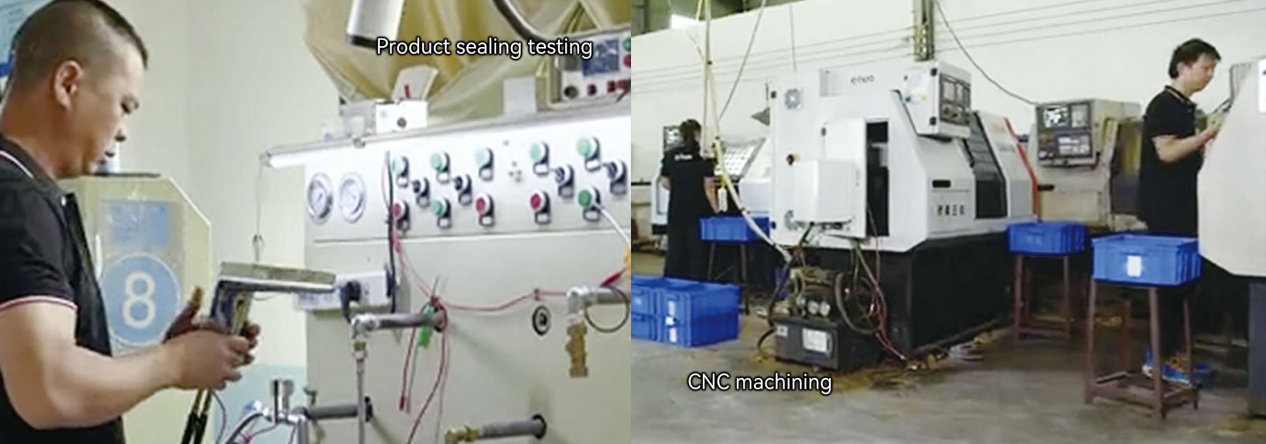
Production and inspection area at the Quanzhou facility, where the reports behind plating, flow and sealing claims are generated.
Comparison Table: What Each Document Actually Proves
| Document | Issued by | What it covers | Market it supports | Stated validity | What it does not prove |
|---|---|---|---|---|---|
| ISO 9001:2015 quality management system, CN21/31351 | SGS | Factory quality management system | Global — not market-specific | 2024-08-03 to 2027-08-03 | Model-level conformity, EN 817 or EN 200 performance, plating thickness |
| TUV Austria approval, TA 385213725 | TUV Austria | Product approval against EN 813:2008 | EU | 2021-06-15 to 2026-06-15 | Management-system control, coating thickness, models outside the listed scope |
| EN 817:2008 and EN 200 references | Named in the company's certification list | European tapware standards for mixer and single-tap configurations | EU | Confirm per document | Nothing by itself — requires the matching test report |
| Plating thickness and salt-spray data (chrome / nickel) | In-house laboratory or third-party laboratory | One finish on one model or batch | Set by the buyer's specification | Tied to the tested batch | System certification or product approval status |
| Certificate of Analysis / Conformance, origin documents | Supplier, chamber or authority | Shipment-level documentation | Customs and import clearance | Per shipment | Product-standard conformity |
Read each row as a separate question. A buyer who needs all five answers is asking for five documents, not one.
Frequently Asked Questions
Does an SGS ISO 9001 certificate certify a brass basin faucet?
No. ISO 9001:2015 certifies a quality management system, not a product. Ehoo holds SGS ISO 9001:2015 certification, certificate CN21/31351, valid from 2024-08-03 to 2027-08-03, which supports the claim that the factory's processes are defined and auditable. Product conformity for a specific brass basin faucet comes from the applicable standard and its test report — for example EN 817:2008 or EN 200 — together with the TUV Austria approval where the EU market is involved. Treat the two document types as separate evidence and request both.
The TUV Austria certificate shows validity from 2021-06-15 to 2026-06-15. What should a buyer do now?
Request the current certificate before relying on the approval. The stated validity window of TUV Austria certificate TA 385213725 ended on 2026-06-15, so a buyer reviewing the file after that date should ask for the renewal or re-issue, confirm whether the renewed scope still lists the models being purchased, and check the standard named on it — the file in circulation cites EN 813:2008. Until the renewed document is issued, the expired certificate supports historical context only, not a current compliance claim.
How do I keep batch traceability with a long-term brass basin faucet supplier?
Make traceability a contractual habit rather than an annual request. For each shipment, ask for the model number, the batch or date code, the test report reference covering plating, flow, sealing and valve life, and a current copy of the certificates that apply to that model. Ehoo states that 100% of units are water- and air-tested, publishes a cartridge life figure above 150,000 cycles, and operates in-house metal spectrometry, valve life, water flow, salt spray and sealing testing equipment, which is what makes a per-batch report possible. Combined with a 3 to 5 year warranty depending on the product series and more than two decades of processing and export experience, the file becomes verifiable order by order rather than once at the start of the relationship.
Do certification requirements change the MOQ or the unit price?
Certification work is scope-dependent, so agree the scope before the quotation rather than after it. If a program requires model-specific test reports or a named model on a certificate annex, that scope has to be defined while the price is being built. Ehoo's standard MOQ starts from 400 pcs per model — the same figure applies to brass basin faucet model 35801-515, which also accepts OEM and ODM and carries a 5-year warranty. Buyers comparing a certificated basin faucet against an uncertified alternative should compare on the same scope, same finish specification and same documentation set.
How fast can samples and mass production follow document approval?
Ehoo's stated lead time is about 7 days for samples and 20 to 30 days for mass production after deposit payment and final product approval, with payment terms of 30% deposit in advance and 70% balance against the copy of B/L. Because document review often runs in parallel with sampling, start the certificate verification at the same time as the sample request instead of after it. To begin that process, the current Ehoo catalog 2025–2026 can be downloaded here: ehoo catalog 2025-2026, and document requests can be sent to export@cnehoo.com.
Conclusion
The SGS ISO 9001:2015 certificate and the TUV Austria approval are both useful, and neither one is a substitute for the other. ISO 9001:2015, certificate CN21/31351 with validity from 2024-08-03 to 2027-08-03, tells a buyer how the plant is managed. The TUV Austria approval, certificate TA 385213725 against EN 813:2008 with validity from 2021-06-15 to 2026-06-15, tells a buyer which product standard was assessed for the EU market — and its expiry date tells them to ask for the renewal. Everything else in the pack, from EN 817:2008 and EN 200 references to chrome and nickel plating data, sits in a third category that only a matching test report can support.
Read every basin faucet certificate on five fields, tie each batch to its report, and treat document currency as a condition of the order rather than a formality at the start of it. Ehoo Plumbing Co., Ltd. supplies brass basin faucet programs from Quanzhou to the EU, South America and Southeast Asia, with OEM and ODM support, and welcomes certificate, sample and quotation requests at www.cnehoo.com.

Next step: send your model list and target market, and Ehoo Plumbing Co., Ltd. will return the certificate set that applies to those models — issuer, scope, standard, validity — together with the sample plan and quotation. Email export@cnehoo.com or WhatsApp +86 139-5998-6910. Catalog: ehoo catalog 2025-2026.
Have Questions or Need More Details?
Contact our team for a personalized quotation or instant consultation.
Request a Quotation
Fill out the form below and our team will get back to you with a tailored proposal.
WhatsApp Direct Chat
Prefer to chat in real-time? Message us on WhatsApp for instant assistance & quick answers.
- Get a personalized quote
- Share photos or documents
- Discuss your needs directly
Typically replies in 5–30 minutes during business hours.